A well-packed tennis bag can make a match or practice session more comfortable—and save you from discovering you’ve forgotten water, a spare grip, or your only pair of socks. You don’t need to carry everything you own. Start with a few reliable essentials, then add items that suit your playing habits and the weather.
The tennis-bag essentials
1. Racket—and a backup if you have one
Your racket is the obvious must-have. If you play regularly and own a second racket, bring it along: strings can break, and a backup lets you keep playing without a scramble. A racket cover can help protect the frame during transport.
2. Tennis shoes
Wear shoes designed for tennis rather than assuming running shoes will do. Tennis involves quick side-to-side movements and sudden stops, so court shoes are made with those demands in mind. Choose a pair suited to the surface you play on, and check the court’s rules: some venues require non-marking soles.
3. Water
Bring enough water for your planned session, and refill during breaks. In hot or humid conditions, you may need more than usual, so consider bringing an extra bottle. Don’t wait until you feel very thirsty to take a drink.
4. Towel and a change of clothes
A small towel is useful for wiping your face and hands between games. A spare shirt, socks, or a full change of clothes can make the trip home more comfortable, particularly after a long or hot session.
5. Tennis balls
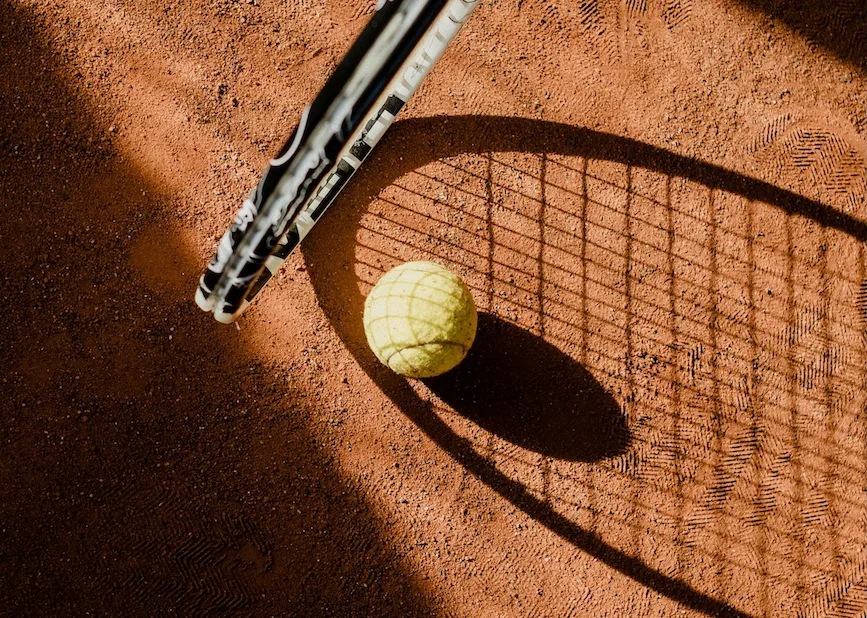
Pack a few balls if you’re responsible for bringing them. For practice, use balls in good condition; worn or damp balls may not bounce or feel as expected. A small ball can or mesh ball holder keeps them together.
6. Overgrips and basic racket-care supplies
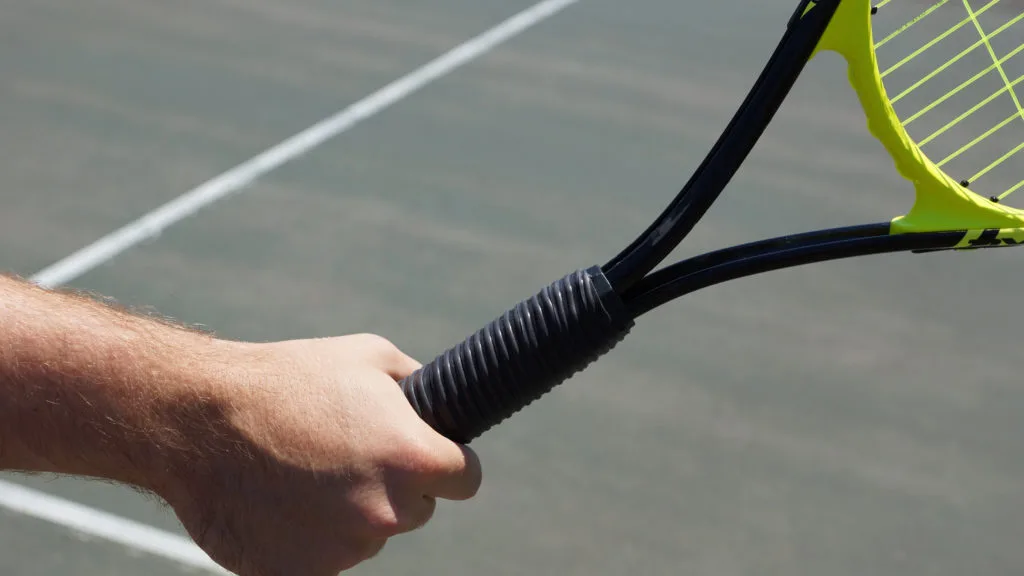
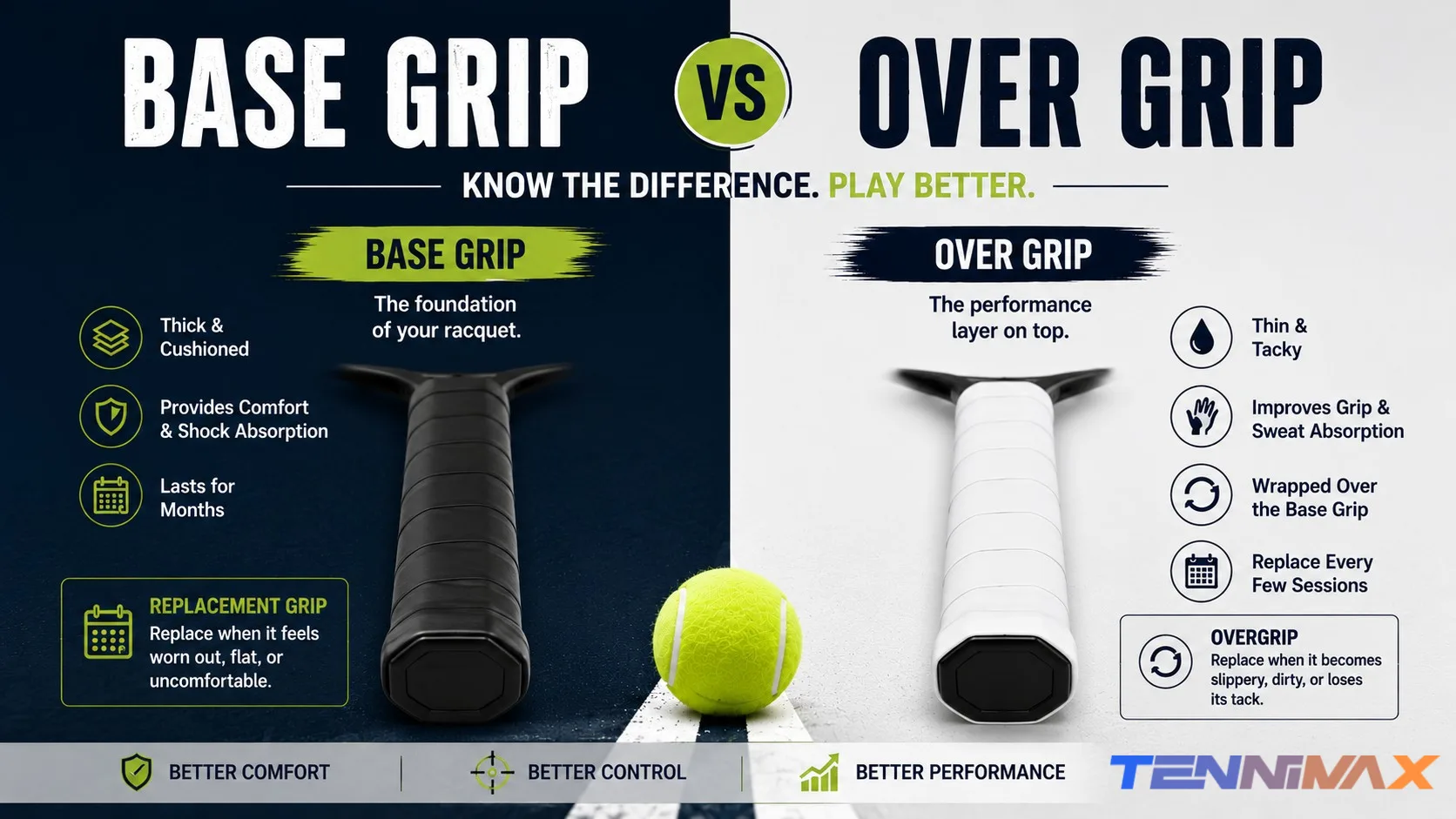
An overgrip is a thin wrap that goes over your racket’s handle. It can improve comfort and absorb sweat, and it’s handy to carry a spare in case your grip becomes slippery or worn. If you play often, you might also pack small scissors to trim the end neatly.
7. Sunscreen, hat, and sunglasses
For outdoor tennis, pack sunscreen and reapply it according to its label, especially if you’re playing for an extended period. A cap or visor can help shade your face. Sunglasses designed to stay secure during movement may also be useful, provided they don’t interfere with your vision.
8. A small first-aid kit
A compact kit might include plasters, blister pads, antiseptic wipes, and any personal items you regularly need. Keep medication in its original packaging and follow its instructions. For an injury that is severe, worsening, or concerning, stop playing and seek appropriate medical advice.
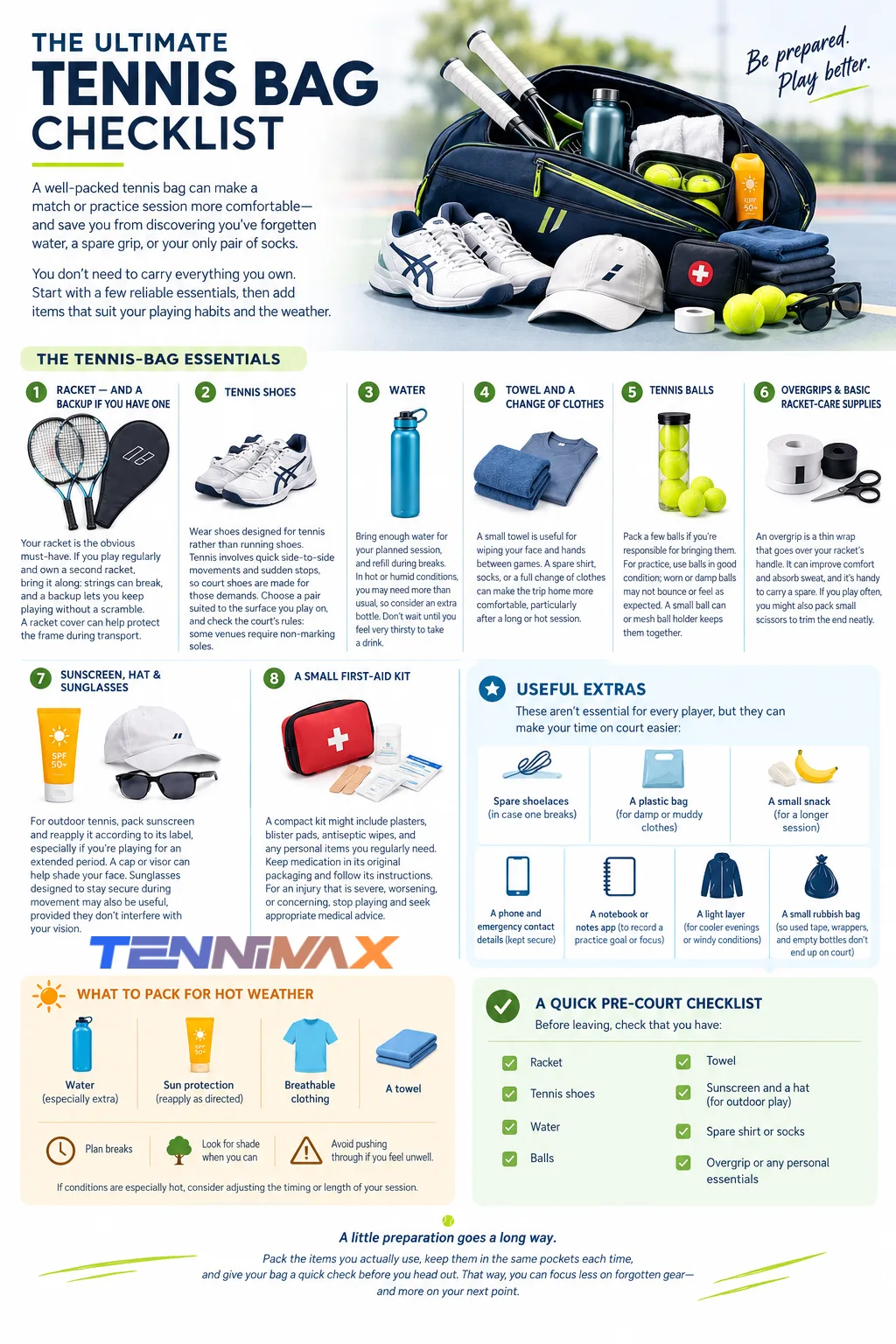
Useful extras
These aren’t essential for every player, but they can make your time on court easier:
Spare shoelaces in case one breaks.
A plastic bag for damp or muddy clothes.
A small snack for a longer session.
A phone and emergency contact details, kept secure and out of the way during play.
A notebook or notes app to record a practice goal or something you want to work on.
A light layer for cooler evenings or windy conditions.
A small rubbish bag so used tape, wrappers, and empty bottles don’t end up on court.
What to pack for hot weather
On warm days, prioritise water, sun protection, breathable clothing, and a towel. Plan breaks, look for shade when you can, and avoid pushing through if you feel unwell. If conditions are especially hot, consider adjusting the timing or length of your session.
A quick pre-court checklist
Before leaving, check that you have:
Racket
Tennis shoes
Water
Balls
Towel
Sunscreen and a hat for outdoor play
Spare shirt or socks
Overgrip or any personal essentials
A little preparation goes a long way. Pack the items you actually use, keep them in the same pockets each time, and give your bag a quick check before you head out. That way, you can focus less on forgotten gear—and more on your next point.