Most first-time players walk into a sports store, pick up whatever looks good, and walk out with a racquet that's either too heavy, too stiff, or sized for someone twice their age. It's not their fault — the in-store advice is often thin, and the packaging doesn't tell you what actually matters.
This guide does. We'll cover the five things that determine whether a racquet helps you improve or quietly holds you back — and what each one means in plain terms.
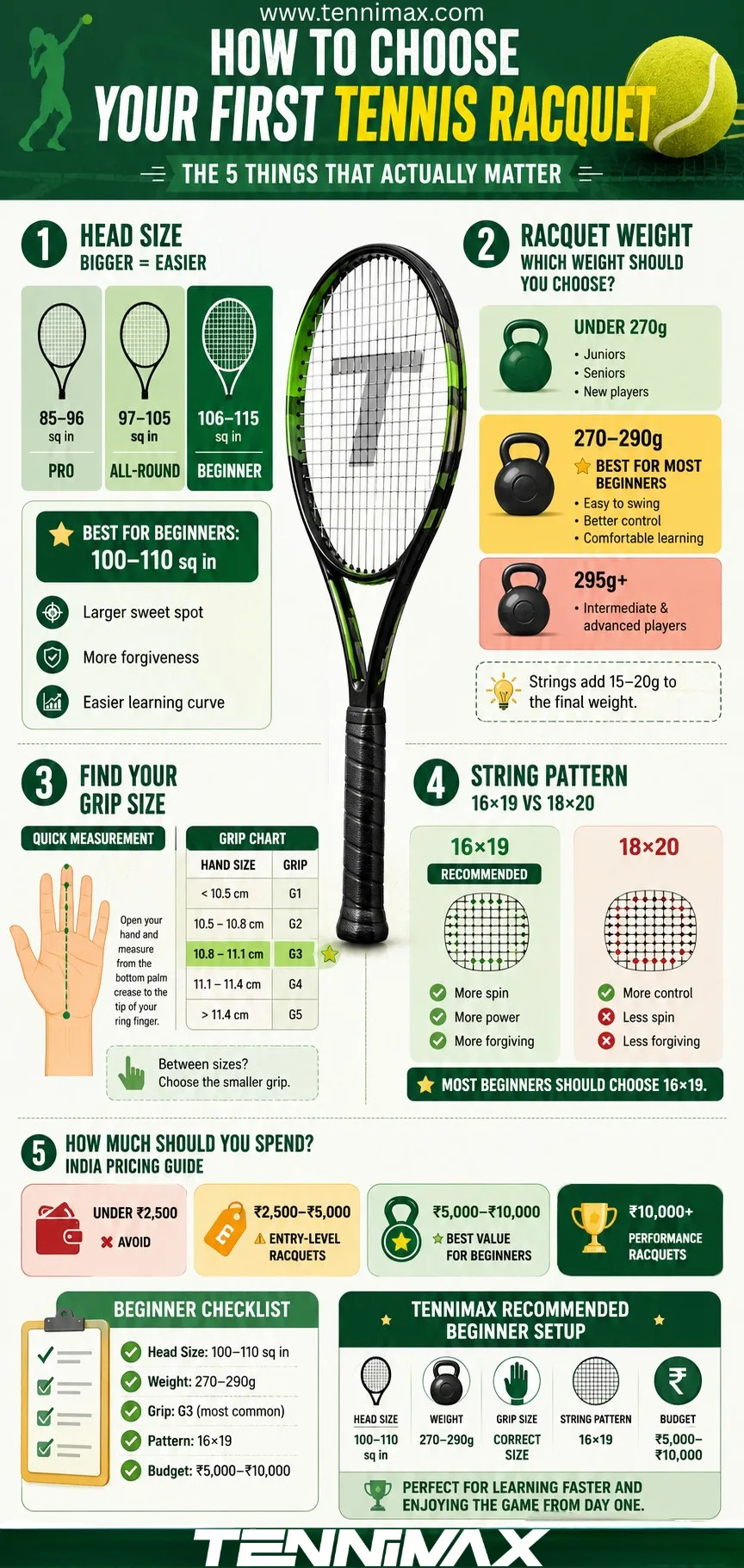
1. Head Size: Go Bigger When You're Starting Out
The head is the stringed area of the racquet. It's measured in square inches, and it's the single most beginner-friendly variable you can get right.
There are three categories, though in practice the market has largely consolidated around the middle two:
Midsize (85–96 sq in): Small sweetspot, very little margin for error. These frames barely exist on shelves anymore — they're a vintage and pro-only category. Ignore as a beginner.
Mid-plus (97–105 sq in): The most common size on the market today, used across all levels. A good target once you're past your first six months and starting to develop consistent technique.
Oversize (106–115 sq in): A large sweetspot that forgives off-centre hits. Ideal for true beginners — when you mishit (and you will), the ball still goes somewhere useful.
For beginners in India: Start with 100–110 sq in. It makes learning significantly less frustrating, and you're not developing bad habits by using a forgiving frame — you're building the game first.
2. Weight: Lighter Than You Think
Racquets range roughly from 255g to 340g (unstrung). Heavier racquets generate more power and stability on impact, but they fatigue your arm faster and are harder to swing quickly. For beginners, this trade-off almost always resolves in favour of going lighter.
Under 270g: Very light, easy to swing. A good range for juniors, older adults starting the sport, and most women beginners — many beginner-friendly frames sit right here.
270–290g: The practical sweet spot for most adult beginners. Manoeuvrable enough to learn proper swing mechanics without arm strain.
295g and above: Better suited to intermediate-to-advanced players with an established technique and a faster swing.
A few things worth knowing: manufacturers always quote unstrung weight — strings add roughly 15–20g to whatever number is on the box. Some display racquets in stores already have an overgrip applied, which adds a few more grams and slightly thickens the handle. If in doubt, ask.
3. Grip Size: The One That's Most Overlooked
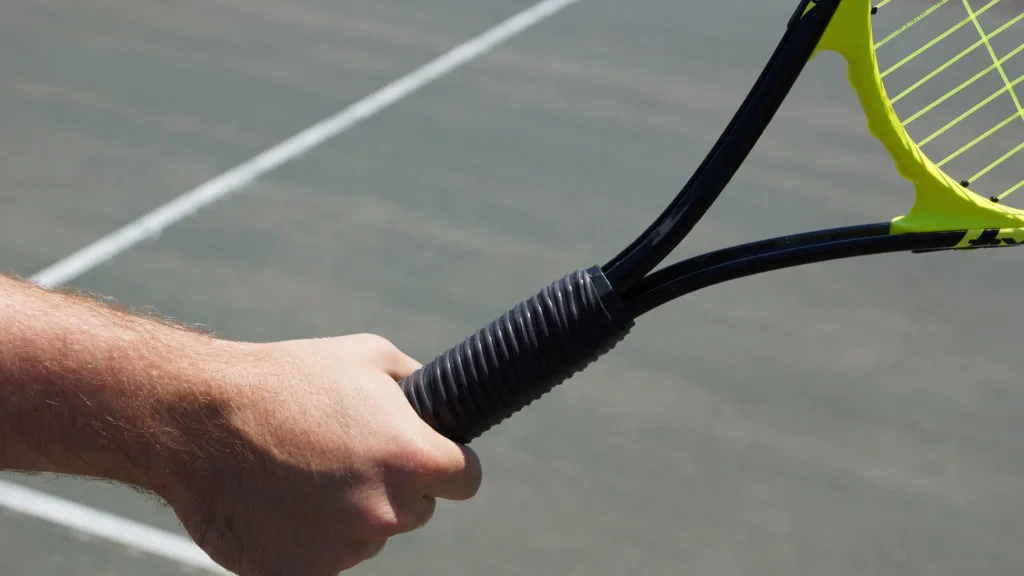
A grip that's too small will cause your wrist to over-rotate, leading to shanked shots and, over time, elbow problems. Too large and you can't close your grip naturally, which limits wrist movement and makes generating topspin harder.
How to measure: Open your dominant hand flat, fingers together and extended. Place a ruler at the bottom horizontal crease of your palm (the lowest of the main lines running across your hand — not the middle one) and measure straight up to the tip of your ring finger. This is your grip measurement.
Mesure Your Grip
Under 10.5 cm (Under 4⅛")
10.5 – 10.8 cm (4⅛"–4¼")
10.8 – 11.1 cm (4¼"–4⅜")
11.1 – 11.4 cm (4⅜"–4½")
Above 11.4 cm (Above 4½")
Measure from Bottom of Palm to Top of Middle FingerRecommended Grip Size
G1 – 4⅛"
G2 – 4¼"
G3 – 4⅜"
G4 – 4½"
G5 – 4⅝"
Matches with your sizeA simpler cross-check: Pick up a racquet and hold it with a normal forehand grip. Slide the index finger of your other hand into the gap between your palm and your fingertips. It should fit snugly — like a finger in a glove. Too much space means the grip is too large; can't fit it in at all means too small.
Most adult men in India land on G3 or G4. Most adult women on G2 or G3. If you're between sizes, go smaller — you can always build up with an overgrip. Going down a size after buying isn't possible.
4. String Pattern: Don't Overthink It Yet
The string pattern refers to how many strings run vertically (mains) and horizontally (crosses). The two common patterns are:
16x19: More open spacing, more spin potential, slightly more power. The most popular all-court pattern.
18x20: Tighter spacing, more control, less spin. Favoured by flatter hitters with high swing speeds.
As a beginner, this distinction matters very little. Pick a racquet with a 16x19 pattern and move on — it's the more forgiving and versatile option. The string pattern becomes meaningful once you have a consistent swing and know whether you're naturally a topspin or flat hitter.
5. Budget: What ₹3,000 to ₹12,000 Actually Gets You
Indian pricing for beginner racquets is broader than people expect. Here's an honest breakdown:
Under ₹2,500: Avoid. These are typically unbranded or department-store frames that are either too heavy, poorly balanced, or strung so badly out of the factory that they're difficult to learn on. Save a little longer.
₹2,500 – ₹5,000: Entry-level frames from established brands — Wilson Clash 108, Head Ti.S6, Yonex EZONE series (lower end). These are legitimate training racquets. Fine to start on, especially for juniors.
₹5,000 – ₹10,000: Mid-range beginner-to-intermediate frames. Better materials, better balance, and they come strung with strings that won't snap in the first month. This is the range we'd recommend for most adult beginners.
₹10,000 and above: Performance frames that will outlast your beginner phase. Worth spending here only if you know you're committing seriously to the sport.
One practical note: buy from a dedicated sports store or a reputable online retailer, not a general marketplace listing. Frame counterfeits are more common in India than most players realise, particularly for popular Wilson and Babolat models.
A Word on Demos and Testing
If you're in a city with a tennis academy or a well-stocked store, ask to demo a racquet before buying. Many academies in Ahmedabad, Mumbai, Bangalore, and Delhi allow you to hit with a few frames before committing. Twenty minutes on court with a frame tells you more than any spec sheet.
If you can't demo, buy from somewhere with a reasonable return window and hit with it in the first week — don't leave the tags on for three months and then wonder if it suits you.
What Comes After the Racquet
Picking the frame is step one. Once you have it, the two things that most affect how it actually plays are:
Strings: Factory strings on budget racquets are often low-quality nylon that deadens within a few weeks of regular play. Getting the racquet restrung with a proper string — even an entry-level polyester or multifilament — makes an immediate, noticeable difference. If you're not sure where to start, our guide on string gauge and spin vs. power is a good next read.
String tension: This single number controls how the racquet feels on every shot — power, control, arm comfort. Most beginners string too tight out of habit or bad advice. Our string tension guide breaks down what 55 lbs vs 60 lbs actually feels like, including what to do in India's heat.
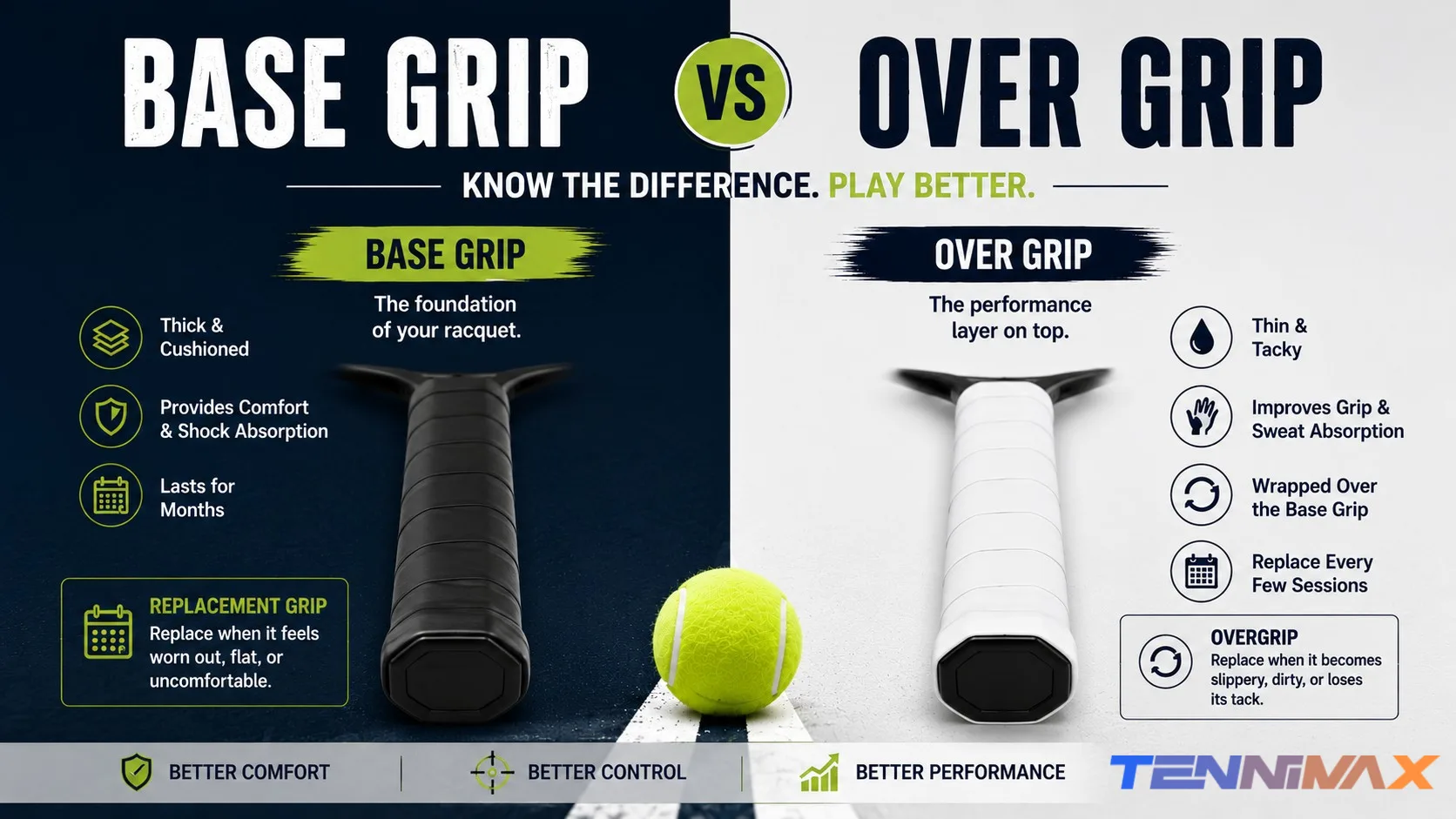
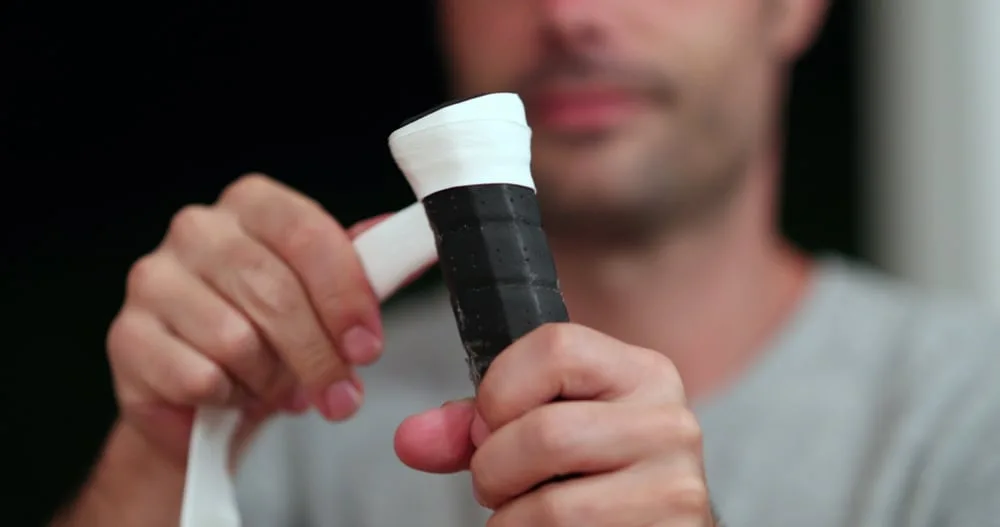
Grip: A fresh overgrip makes the racquet feel new and gives you far better control, especially through Indian summers when your hands are sweating through a session. It's the cheapest performance upgrade in tennis.
The Short Version
If you want to walk away with one takeaway from this guide: buy a racquet with a large head (100–110 sq in), a light-to-medium weight (265–290g unstrung), the right grip size for your hand, and spend at least ₹5,000 if you're an adult taking the game seriously. Everything else — string pattern, brand, colour — is secondary.
Get on court, get lessons if you can, and restring it after three months of regular play. That's the complete beginner setup.
Shop on Tennimax
Browse Tennimax strings, overgrips, and accessories — all engineered in India