Walk into any tennis shop or browse online tennis equipment stores, and you'll quickly come across two terms that often confuse players: overgrips and replacement grips.
At first glance, they appear to do the same thing. Both wrap around the handle of your racquet. Both affect comfort, feel, and control. Both eventually wear out and need replacing. Yet despite these similarities, overgrips and replacement grips serve very different purposes.
Many recreational players are not entirely sure which one they need. Some buy replacement grips when they really need overgrips. Others keep layering overgrips indefinitely without realizing that the original grip underneath has already deteriorated. The result is often a racquet handle that feels too large, too slippery, or simply uncomfortable.
Understanding the difference between an overgrip and a replacement grip is one of the simplest ways to improve comfort and confidence on court. Once you know what each product is designed to do, choosing the right option becomes much easier.
What Is a Replacement Grip?
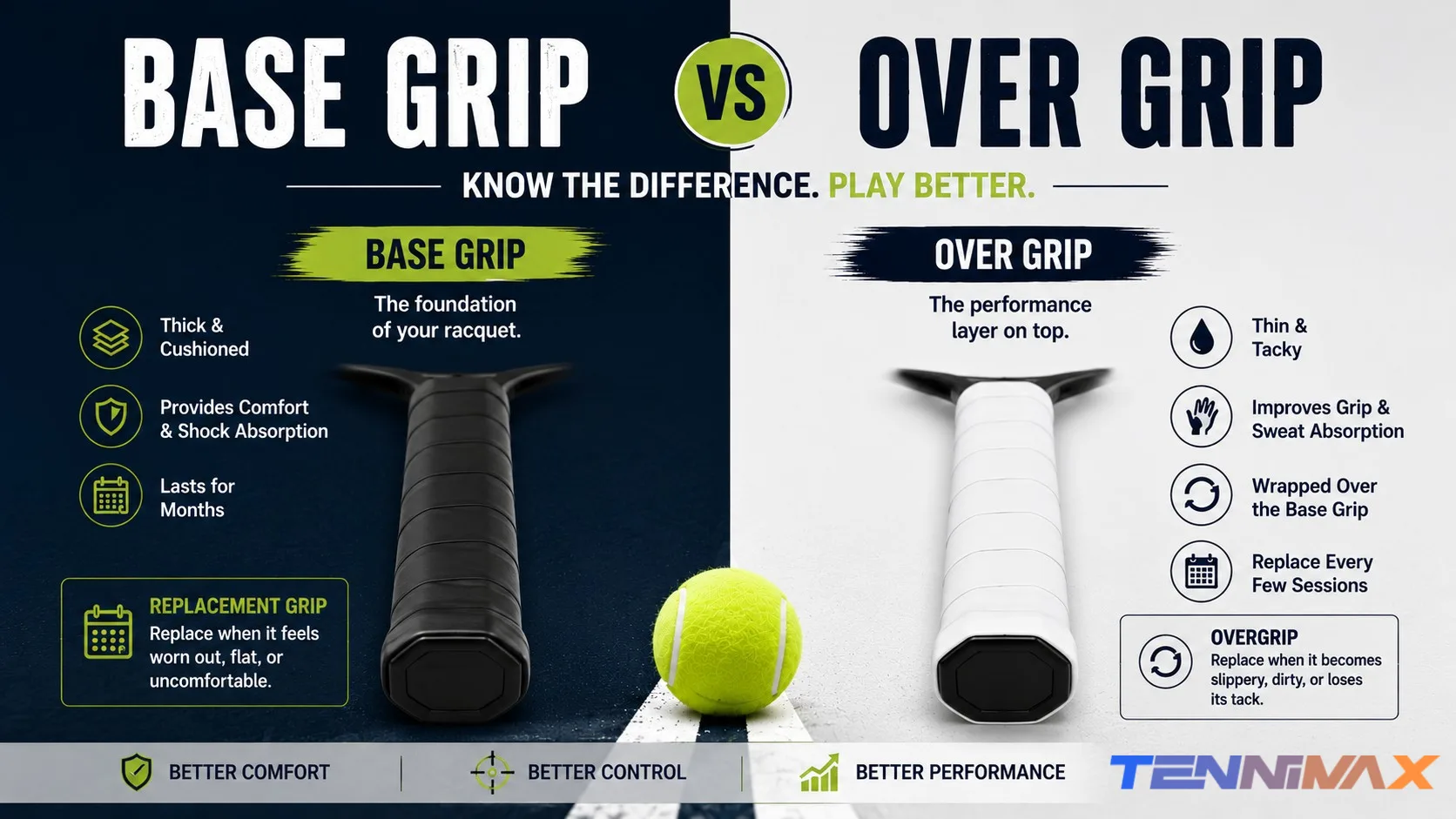
A replacement grip is the primary grip installed directly onto the racquet handle.
When a tennis racquet leaves the factory, it comes with a replacement grip already wrapped around the handle. This grip forms the foundation of the player's connection with the racquet. It is thicker than an overgrip and is designed to provide cushioning, comfort, and shock absorption.
If you were to remove all layers from your racquet handle until you reached the bare pallet, the grip you would install directly onto that pallet would be a replacement grip.
Because replacement grips are relatively thick, they play a major role in determining how the racquet feels in your hand. They influence grip size, vibration dampening, and overall comfort during play.
Most replacement grips are made from synthetic materials, although leather replacement grips are still popular among advanced players seeking a firmer, more direct feel.
Unlike overgrips, replacement grips are not intended to be changed frequently. A quality replacement grip can last for several months, depending on playing frequency and maintenance.
What Is an Overgrip?
An overgrip is a thin layer that wraps over the replacement grip.
Its purpose is not to replace the underlying grip but to enhance it. Overgrips are primarily used to improve tackiness, absorb sweat, increase comfort, or slightly adjust grip size.
Think of an overgrip as the consumable layer of your racquet handle. It is the part that directly contacts your hand during play and therefore wears out much faster than the replacement grip beneath it.
Most players who use overgrips replace them regularly. Competitive players may change them every few sessions, while professionals often install a fresh overgrip before every match.
Because overgrips are thin, they do not significantly alter the feel of the racquet. Instead, they provide a fresh surface that helps maintain a secure hold throughout play.
Why Do Many Players Use Both?
One of the biggest misconceptions among beginners is the belief that overgrips and replacement grips are alternatives.
In reality, most players use both.
The replacement grip provides the structural foundation and cushioning. The overgrip acts as a protective layer that sits on top and takes the wear and tear.
This arrangement offers several advantages. The overgrip keeps sweat, dirt, and oils away from the replacement grip, helping it last longer. When the overgrip becomes worn or slippery, it can be removed and replaced within minutes while the underlying replacement grip remains intact.
For this reason, many players may go through dozens of overgrips before needing to replace the base grip underneath.
How They Affect Feel and Comfort
The difference in thickness between the two products creates a noticeable difference in feel.
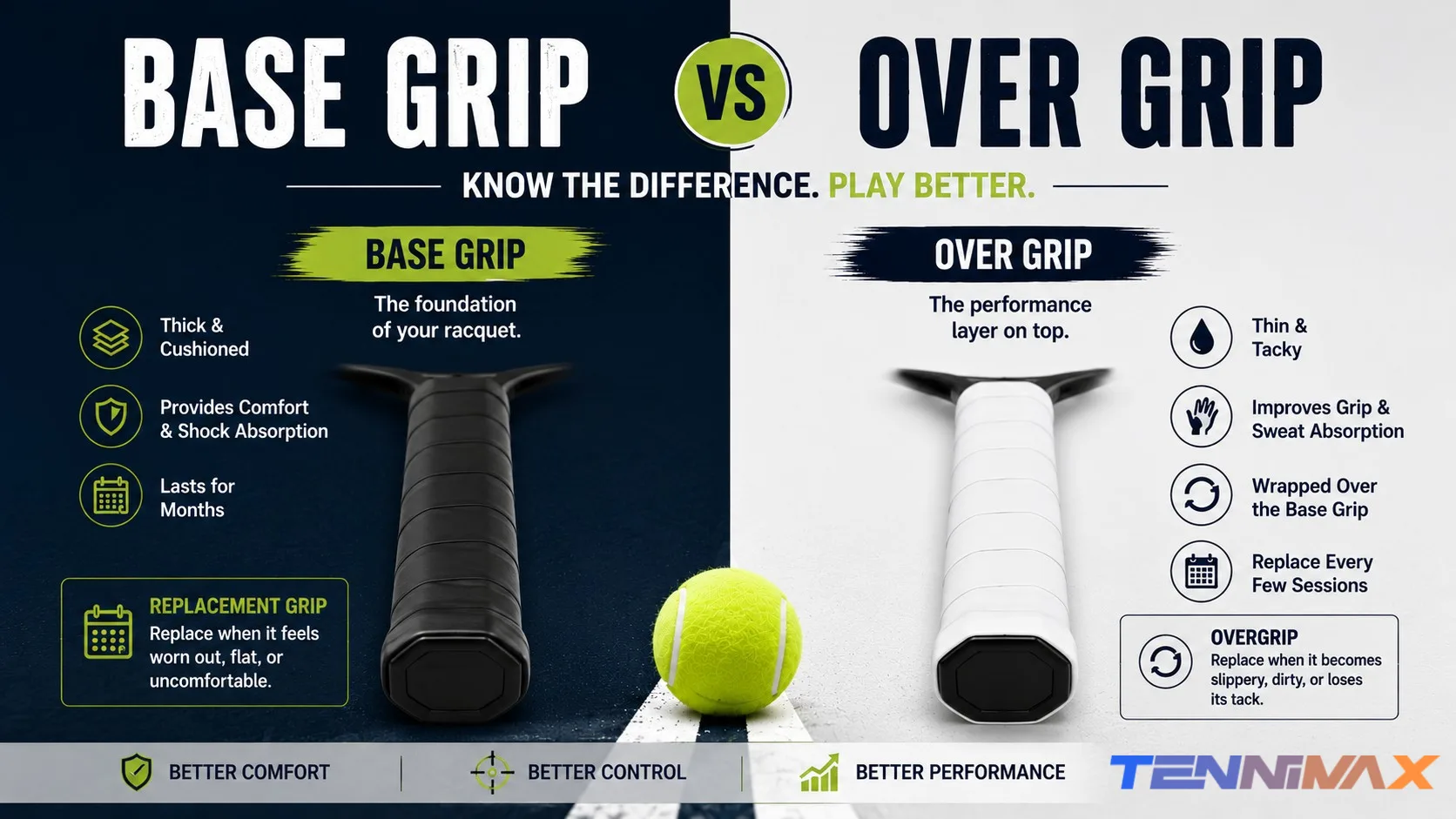
Replacement grips are designed to provide cushioning and comfort. They absorb impact and reduce the amount of shock transmitted to the hand and arm. Players who experience discomfort or arm fatigue often pay close attention to the type of replacement grip they use.
Overgrips, on the other hand, are focused more on surface feel than cushioning. Some are highly tacky and provide a sticky sensation that helps players maintain a secure hold. Others prioritize sweat absorption and are preferred by players who play in hot and humid conditions.
In countries with warm climates, many players find that absorbent overgrips offer better performance than extremely tacky models, which can become slick as moisture accumulates.
Which One Wears Out Faster?
The answer is overgrips by a considerable margin.
Every time you play, sweat, friction, and pressure gradually break down the outer surface of the grip. Since the overgrip is the first layer your hand touches, it absorbs most of this wear.
Overgrips can become smooth, slippery, discolored, or torn after relatively short periods of use. Once this happens, grip security begins to decline.
Replacement grips wear out much more slowly because they remain protected underneath. However, they are not immune to deterioration. Over time, they lose cushioning, compress under pressure, and may develop hard spots or cracks.
If your racquet handle feels uncomfortable even after installing a fresh overgrip, the replacement grip underneath may be due for replacement.
How Grip Size Is Affected
Grip size is an important consideration when deciding whether to use an overgrip or replacement grip.
A replacement grip typically contributes most of the handle's thickness. Changing from one replacement grip to another can noticeably alter how the racquet fits in your hand.
An overgrip is much thinner, but it still increases grip size slightly. For players who are between grip sizes, this can actually be beneficial.
Many players intentionally purchase a racquet one grip size smaller and then use an overgrip to achieve their preferred fit. This approach provides flexibility because the overgrip can easily be removed or replaced.
Problems arise when players continue adding new overgrips without removing the old ones. Over time, the handle can become significantly larger than intended, affecting comfort and stroke mechanics.
Do Professional Tennis Players Use Overgrips?
Yes, almost all professional players use overgrips.
While the exact brands and preferences vary, overgrips are a standard part of professional tennis. Players rely on them to maintain a consistent feel and fresh surface throughout tournaments.
Professional players are extremely sensitive to changes in grip feel. Even minor differences in tackiness or moisture absorption can influence confidence during important points.
As a result, it is common to see professionals changing overgrips frequently, sometimes before every match or practice session.
When Should You Replace Each One?
An overgrip should be replaced whenever it begins to lose performance. Signs include slipperiness, visible wear, tearing, discoloration, or a loss of tackiness.
The replacement grip should be replaced when it no longer provides adequate cushioning or when it feels compressed, hard, or uneven beneath the overgrip.
For most recreational players, overgrips may need replacement every few weeks, while replacement grips may last several months or longer.
The exact timeline depends on playing frequency, climate, sweat levels, and personal preference.
So Which One Do You Need?
If your racquet currently has its original grip and you simply want better feel, improved sweat absorption, or a fresher surface, an overgrip is usually the right choice.
If the underlying grip has become worn out, flattened, damaged, or uncomfortable, then it is time to install a new replacement grip.
In many cases, the ideal solution is not choosing one or the other. It is using a quality replacement grip as the foundation and then protecting it with regularly changed overgrips.
This combination delivers the comfort, control, and consistency that most tennis players are looking for.
Tennimax EvoGrip Pro
Tennimax EvoGrip Pro overgrip delivers professional-level tackiness and moisture absorption. Engineered for Indian climate conditions — it stays grippy through long matches and intense rallies.
Tennimax EvoGrip Pro Soft
A softer EvoGrip overgrip variant with extra cushioning for players who prefer a thicker, more comfortable feel. Great for long training sessions.
Tennimax EvoGrip Base
A premium replacement base grip for a complete overhaul of your tennis racquet handle. Firm, comfortable support that restores the original feel of your racket handle.
Final Thoughts
The distinction between an overgrip and a replacement grip is simple once you understand their roles. A replacement grip forms the foundation of the racquet handle, while an overgrip serves as the replaceable outer layer that enhances feel and protects the grip underneath.
For most players, the overgrip is the component that requires regular attention. It is also one of the most affordable upgrades available in tennis. A fresh overgrip can restore confidence, improve control, and make a racquet feel almost new again.
If you are unsure which grip solution is right for you, start by evaluating the condition of your current handle. A worn-out replacement grip requires replacement. A grip that simply feels slippery or lacks freshness usually needs nothing more than a new overgrip.